Quick Facts:
- 336 pages
If I were nine to thirteen years old, I probably would have loved this book. I can say this with some confidence, because it came highly recommended to me by a thirteen year-old with whom I typically share literary tastes. That said, I found Dragon Run, by Patrick Matthews, to be a solid exercise in common fantasy motifs, with enough originality to raise it above a bit above most of its competition.
The premise of Dragon Run is that on the annual "Testing Day", young adults are each tattooed with a number (1-7) that is supposed to represent their ability and therefore worth to society. Their number determines their rank in society and their future occupation. Our hero, twelve-year old Al Pilgrommor, enters Testing Day nervous but calm. His parents are fours, surely he won't be lower than a three.
The number tattooed on the back of Al's neck is a zero.
Zeros don't exist.
Zeros don't exist because as soon as one is identified they are killed, along with their entire family line.
This is perhaps the best plot device in Dragon Run. In making Al a zero, Matthews immediately upsets the familiar ordinary-boy-finds-out-he's-extraordinary storyline. And to his credit, Matthews never subverts this. Throughout the entire novel, I expected Al to discover that his labeling was a mistake, or that zeros were actually individuals with so much potential for power that they were eliminated for the "good of civilization." This never happens. Though Al does learn more about the ranking process and what qualities are actually used to make a zero ranking, he remains a zero throughout the entire story.
This allows for some very worthwhile exploration of what it means to be seen as the lowest-of-the-low, and can serve as fodder for discussion about how valid it is to judge someone based on appearance or superficial ranking. Al is the story's hero, despite his zero status, and he is appropriately heroic at the appropriate times. Thus, another excellent discussion point is raised: what does it mean to be a hero?
Another aspect of Dragon Run that I thoroughly enjoyed (and actually wish Matthews had indulged in a bit more!) was its world building. Al's world is ruled by rarely-seen dragons, who apparently created humans (as well as the other races that populate the novel) and use a select few humans through which to communicate and exert their power. This is a very interesting concept, and the dragons as indifferent and malevolent god-figures is a theme present but not fully explored in terms of its implications for human society. Though one of the major story arcs involves an act of atrocity committed by dragons on humankind, the atrocity was dealt on a very specific group of people and then kept largely a secret afterwards. What blame people did place was on another human, rather than on the dragons. While I realize this was necessary for the way in which Al's adventure unfolds, I can't help feeling that it was something of a lost opportunity. For a society to be as established and entrenched as this one apparently is, so little acknowledged acrimony for the beasts bringing the public arbitrary suffering seems improbable.
As a whole, I found that Dragon Run held little for the adult reader that was original or surprising. The characters are largely stock fantasy figures, with predictable dialogue. Take, for example our introduction to Trillia, the token "big-talking-but-secretly-soft-female" best friend:
"I swear I will pull these pins out of my hair and jam them up your skinny-"
"I think you missed a spot," Al interrupted.
. . . She turned her glare on him. "Don't think I won't beat you up. Right here. Right now. Right in front of everybody, Mister too-good-to-get-dressed-up."
- Dragon Run, page 4
For an young reader or someone new to fantasy, this is probably a very entertaining character introduction. For those of us a bit older, and who have spent a fair amount time in the fantasy genre, it's less novel. We've met this girl a million times already, and we know her story arc before it even begins.
I therefore recommend Dragon Run as a solid addition to any teacher's fantasy section of the bookshelf, particularly in the upper elementary and middle school grades. It's fast-paced and has the feel at times of a live-action movie, which many students are sure to enjoy. And as discussed above, it opens doors to a number of worthwhile conversations. It just may not hold adult readers in thrall as much as it will the kids.
"A reader lives a thousand lives before he dies . . . The man who never reads lives only one." - George R.R. Martin
Showing posts with label fantasy/sci-fi. Show all posts
Sunday, July 20, 2014
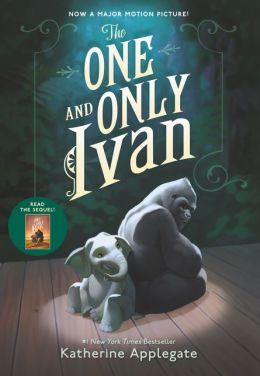
THE ONE AND ONLY IVAN, by Katherine Applegate
Quick Facts:
- Newbery Award Winner
- Illustrated by Patricia Castelao Costa
- 305 pages
The best thing about The One and Only Ivan is that once you've finished it, once you've cried and cheered and rooted for Ivan for 305 pages, you find out that it's true. You learn that there was actually a silverback named Ivan who lived in solitary captivity in Washington state until public outcry and pressure led to his being sent on "permanent loan" to Zoo Atlanta, where he lived to the age of 50. You learn that he was known for his paintings. You begin to wish that this book had come out just a few years earlier so that after you read it you would still have the chance to visit Ivan. To maybe purchase one of his pictures.
And that's when it starts to hit you. If there really was a silverback named Ivan whose life took the general trajectory of the titular character in Katherine Applegate's novel, then it's not just the good parts that are true, it's all of the hideousness and pain that came before them as well. It's little Ivan being ripped away from his parents. It's Tag dying en route to America. It's a mighty silverback gorilla living, alone, for twenty-seven years without seeing any others of his kind.
And didn't you- in your elation over his existence and your wish that you could visit him- didn't you just represent the very culture that allowed these things to occur?
The power of Applegate's novel lies not simply in how relatable she makes Ivan, but in the questions she forces us to face in ourselves. One way she does this is by making his captor frighteningly relatable. It's easy to read the scene in which Mack goads Ruby with the claw-stick and think, "How terrible, I would never stand around and allow that to happen!" It's less easy to say that about the scenes of Ivan growing up in Mack's house.
"It was Mack who pried open that crate, Mack who bought me, and Mack who raised me like a human baby."
- The One and Only Ivan, page 130
Ivan wears diapers, drinks from a bottle, sleeps in human beds, and is even taken to dinner with Mack and his wife. He is not abused or left in a cage alone, and really, the image of a baby gorilla in a diaper is so adorable- can it really be such a bad thing? Would we really react to it as animal cruelty if we saw it on the street? The hard answer is that unfortunately, most of us would not.
Despite the how relatable these scenes are, Applegate never for a moment lets the reader forget why it is, indeed, pure selfishness and cruelty:
"One day, after many weeks of loud talking, Helen packed a bag and slammed the front door and never came back.
I don't know why. I never know the why of humans.
That night, I slept with Mack in his bed.
My old nests were woven of leaves and sticks and shaped like his bathtub, cool green cocoons.
Mack's bed, like mine, was flat, hot, without sticks or stars."
- The One and Only Ivan, page 141
Though Mack does not physically abuse Ivan, he tries to treat him as though he is human, and in doing so denies the very fact that Ivan is a gorilla. This complete removal of everything that makes Ivan a gorilla is itself abuse. Gorillas are not pets, and there is no in-between about it: keeping a gorilla as a pet is just as wrong as turning a gorilla into a roadside attraction.
Here, Bob the mutt serves as an interesting contrast to Ivan's situation. Unlike Ivan, who was born and (initially) raised a wild animal before falling into human captivity, Applegate implies that Bob was the product of a different type of human cruelty altogether: overbreeding and indifference.
"Bob used to have three brothers and two sisters. Humans tossed them out of a truck and onto the freeway when they were a few weeks old. Bob rolled into a ditch.
The others did not."
- The One and Only Ivan, page 35
Bob, the product of dogs bred as house dogs even if he himself is not one, can barely scrape by on his own, in this human world into which he was tossed to die. He is not a wild animal, he is a natural and deliberately bred human companion. Thus, the fact that he ends the novel living with Julia is more than just a happy ending, it's where he should be, where (like Ivan at Zoo Atlanta) he is most likely to thrive.
And yet, still, there is something unsatisfying in both of their stories. Because really, we don't want Ivan at Zoo Atlanta, we want him to have never been ripped from his family in the Democratic Republic of the Congo. We don't want Bob to have come to Julia the way he did; we wish that he and all of his brothers and sisters could be living with her. But are either of those things even possible in today's world? Or are zoos and loving people who show up after the fact the best we can hope for?
It is these complicated and emotional questions that make The One and Only Ivan such a powerful story, particularly for children. Because, of course, the answer is that if human attitude towards and treatment of animals is going to change, it has to begin with the children.
Below is a video of the real Ivan, released by Zoo Atlanta after his passing in 2012:
- Newbery Award Winner
- Illustrated by Patricia Castelao Costa
- 305 pages
The best thing about The One and Only Ivan is that once you've finished it, once you've cried and cheered and rooted for Ivan for 305 pages, you find out that it's true. You learn that there was actually a silverback named Ivan who lived in solitary captivity in Washington state until public outcry and pressure led to his being sent on "permanent loan" to Zoo Atlanta, where he lived to the age of 50. You learn that he was known for his paintings. You begin to wish that this book had come out just a few years earlier so that after you read it you would still have the chance to visit Ivan. To maybe purchase one of his pictures.
And that's when it starts to hit you. If there really was a silverback named Ivan whose life took the general trajectory of the titular character in Katherine Applegate's novel, then it's not just the good parts that are true, it's all of the hideousness and pain that came before them as well. It's little Ivan being ripped away from his parents. It's Tag dying en route to America. It's a mighty silverback gorilla living, alone, for twenty-seven years without seeing any others of his kind.
And didn't you- in your elation over his existence and your wish that you could visit him- didn't you just represent the very culture that allowed these things to occur?
The power of Applegate's novel lies not simply in how relatable she makes Ivan, but in the questions she forces us to face in ourselves. One way she does this is by making his captor frighteningly relatable. It's easy to read the scene in which Mack goads Ruby with the claw-stick and think, "How terrible, I would never stand around and allow that to happen!" It's less easy to say that about the scenes of Ivan growing up in Mack's house.
"It was Mack who pried open that crate, Mack who bought me, and Mack who raised me like a human baby."
- The One and Only Ivan, page 130
Ivan wears diapers, drinks from a bottle, sleeps in human beds, and is even taken to dinner with Mack and his wife. He is not abused or left in a cage alone, and really, the image of a baby gorilla in a diaper is so adorable- can it really be such a bad thing? Would we really react to it as animal cruelty if we saw it on the street? The hard answer is that unfortunately, most of us would not.
Despite the how relatable these scenes are, Applegate never for a moment lets the reader forget why it is, indeed, pure selfishness and cruelty:
"One day, after many weeks of loud talking, Helen packed a bag and slammed the front door and never came back.
I don't know why. I never know the why of humans.
That night, I slept with Mack in his bed.
My old nests were woven of leaves and sticks and shaped like his bathtub, cool green cocoons.
Mack's bed, like mine, was flat, hot, without sticks or stars."
- The One and Only Ivan, page 141
Though Mack does not physically abuse Ivan, he tries to treat him as though he is human, and in doing so denies the very fact that Ivan is a gorilla. This complete removal of everything that makes Ivan a gorilla is itself abuse. Gorillas are not pets, and there is no in-between about it: keeping a gorilla as a pet is just as wrong as turning a gorilla into a roadside attraction.
Here, Bob the mutt serves as an interesting contrast to Ivan's situation. Unlike Ivan, who was born and (initially) raised a wild animal before falling into human captivity, Applegate implies that Bob was the product of a different type of human cruelty altogether: overbreeding and indifference.
"Bob used to have three brothers and two sisters. Humans tossed them out of a truck and onto the freeway when they were a few weeks old. Bob rolled into a ditch.
The others did not."
- The One and Only Ivan, page 35
Bob, the product of dogs bred as house dogs even if he himself is not one, can barely scrape by on his own, in this human world into which he was tossed to die. He is not a wild animal, he is a natural and deliberately bred human companion. Thus, the fact that he ends the novel living with Julia is more than just a happy ending, it's where he should be, where (like Ivan at Zoo Atlanta) he is most likely to thrive.
And yet, still, there is something unsatisfying in both of their stories. Because really, we don't want Ivan at Zoo Atlanta, we want him to have never been ripped from his family in the Democratic Republic of the Congo. We don't want Bob to have come to Julia the way he did; we wish that he and all of his brothers and sisters could be living with her. But are either of those things even possible in today's world? Or are zoos and loving people who show up after the fact the best we can hope for?
It is these complicated and emotional questions that make The One and Only Ivan such a powerful story, particularly for children. Because, of course, the answer is that if human attitude towards and treatment of animals is going to change, it has to begin with the children.
Below is a video of the real Ivan, released by Zoo Atlanta after his passing in 2012:
Tuesday, July 15, 2014
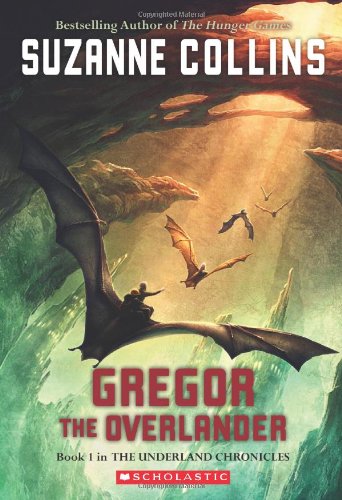
GREGOR THE OVERLANDER, by Suzanne Collins
Quick Facts:
- by the author of The Hunger Games
- 320 pages
I picked up this book for two reasons: 1) it was authored by Suzanne Collins (The Hunger Games) and 2) it was recommended to me by a 6th grade student with such enthusiasm that he tried to lend me his copies of the entire series at once. When a book gets a young reader that excited, it cannot be ignored.
Gregor the Overlander was Suzanne Collins' first novel, and it's an entirely different animal than her more well-known Hunger Games series. Gregor is an 11-year old boy living with his mother and sisters in a tiny New York apartment. They live on the brink of poverty, and Gregor has been acting as the man of the house since his father disappeared nearly three years before. When his toddler sister Boots falls, like Alice through the rabbit hole, into another world through an air-conditioning grate, Gregor follows her and the adventure begins.
The world where Gregor and Boots find themselves is known as the Underland, so called because it lies deep in the Earth, below the "normal" human realm at the Earth's surface. Thus, upon arrival in this world, Gregor and Boots are "Overlanders". The Underland is populated by creatures familiar and yet terrifyingly overgrown. Bats, cockroaches, rats, and spiders all control land in the Underland, but they are enormous compared to their Overland counterparts. The cockroaches are large enough for Boots to ride on their backs! Bats are large enough for humans to fly!
And in a move that plays with the familiar fantasy trend of humans riding on the backs of dragons, the humans living in Collins' Underworld bond with and ride Underland bats. This sort of familiar fantasy element presented in a novel way is part of what makes the Underland fascinatingly creepy instead of horrifically creepy.
One of Collins' greatest accomplishment in this novel is that despite remarkable world building and high-fantasy adventure plot lines, Gregor and Boots remain firmly the focus and heart of the story. Gregor is a character that wins the readers empathy and affection from the very first chapter. Despite being bitterly disappointed about having to stay home for the summer and take care of two-year old Boots instead of going going to camp, all he says to his mother is:
"That's okay, Mom. Camp's for kids, anyway." He'd shrugged to show that, at eleven, he was past caring about things like camp. But somehow that had made her look sadder."
- Gregor the Overlander, page 3
This sets up one of Gregor's most defining character traits: consciously placing the feelings of others above his own. He's not a saint. He's not a sweetly self-sacrificing martyr. Rather, he's a very typical eleven year-old boy with typical eleven year-old boy reactions who acknowledges and then actively suppresses his more selfish inclinations in favor of a greater good. Following the above quote, Gregor's mother offers to keep his nine year-old sister, Lizzie, at home with him and boots. Gregor refuses this, saying that his mother should let Lizzie go to camp, and noting only that:
"[Lizzie] probably would have burst into tears if Gregor hadn't refused the offer." Gregor the Overlander, page 3
Another appealing aspect of both Gregor and Boots is that they are in no way extraordinary. Unlike the heroes of similar stories in which a child leaves the normal world for a fantastical one and discovers that he or she is actually fantastical as well, Gregor and Boots remain endearingly normal. Their successes are a product of their own natures and choices, rather than a birthright or newly-discovered powers. For example, Boots' natural and uninhibited affection for most living things plays a key role in the novel's plot, but it is something that is characteristic of Boots from the very beginning:
"The smooth black bumps [Gregor] had taken for rocks were actually the backs of a dozen or so enormous cockroaches. They clustered around Boots eagerly, waving their antennas in the air and shuddering in delight.
Boots, who loved any kind of compliment, instinctively knew she was being admired. She stretched out her chubby arms to the giant insects. "I poop," she said graciously, and they gave an appreciative hiss."
- Gregor the Overlander, page 19
Boots' affection and kindness towards the cockroaches later sets an example for both Gregor and the other characters they encounter, emphasizing one of Collins' main themes of pursuing peace and mutual understanding over conflict and discord.
Perhaps the most remarkable thing about this novel, however, is it's pacing. Collins' moves briskly from scene to scene, without the reader every feeling as though she's moving too fast. Gregor and Boots, for example, are in in the Underland by the beginning of Chapter 2, meaning that all of our heroes' backstory is covered in a single, 13-page chapter. And yet, as Gregor and Boots are tumbling through space towards the Underland, the reader feels already as if he knows them. The reader has already a strong sense not only of who they are as characters, but of the impact their disappearance will have on their exhausted and overworked mother and their invalid grandmother. Thus, their journey has stakes even at it's outset, and the reader is invested in those stakes.
This pacing is consistent throughout Gregor the Overlander, and the casual reader may not process exactly how many messages and themes are packed into Collin's efficient, nimble writing. I've heard parents dismiss this novel as a "beach-read adventure", concerned that their child should be reading denser literature that "requires them to think".
I take issue with this. There is an enormous amount of thinking provoked by Gregor's journey, both in terms of moral decisions and writing style. The structure of the novel is impeccable and could easily be used to highlight for students the plot elements that create an effective and engaging story. Though The Hunger Games deals with more complex and abstract political themes, Gregor is by far the better crafted story, and I can see incredibly rich discussion in comparison of the two by fans of Collins' writing.
Gregor the Overlander is the first in a five-book series, The Underland Chronicles, and I have taken my 6th grade friend up on his offer to borrow them. Gregor's first adventure made such an impression on me, though, that I'm a little hesitant to begin reading them. The bar for the rest of the books has been set incredibly high.
- by the author of The Hunger Games
- 320 pages
I picked up this book for two reasons: 1) it was authored by Suzanne Collins (The Hunger Games) and 2) it was recommended to me by a 6th grade student with such enthusiasm that he tried to lend me his copies of the entire series at once. When a book gets a young reader that excited, it cannot be ignored.
Gregor the Overlander was Suzanne Collins' first novel, and it's an entirely different animal than her more well-known Hunger Games series. Gregor is an 11-year old boy living with his mother and sisters in a tiny New York apartment. They live on the brink of poverty, and Gregor has been acting as the man of the house since his father disappeared nearly three years before. When his toddler sister Boots falls, like Alice through the rabbit hole, into another world through an air-conditioning grate, Gregor follows her and the adventure begins.
The world where Gregor and Boots find themselves is known as the Underland, so called because it lies deep in the Earth, below the "normal" human realm at the Earth's surface. Thus, upon arrival in this world, Gregor and Boots are "Overlanders". The Underland is populated by creatures familiar and yet terrifyingly overgrown. Bats, cockroaches, rats, and spiders all control land in the Underland, but they are enormous compared to their Overland counterparts. The cockroaches are large enough for Boots to ride on their backs! Bats are large enough for humans to fly!
| Fan art for Gregor the Overlander. |
One of Collins' greatest accomplishment in this novel is that despite remarkable world building and high-fantasy adventure plot lines, Gregor and Boots remain firmly the focus and heart of the story. Gregor is a character that wins the readers empathy and affection from the very first chapter. Despite being bitterly disappointed about having to stay home for the summer and take care of two-year old Boots instead of going going to camp, all he says to his mother is:
"That's okay, Mom. Camp's for kids, anyway." He'd shrugged to show that, at eleven, he was past caring about things like camp. But somehow that had made her look sadder."
- Gregor the Overlander, page 3
This sets up one of Gregor's most defining character traits: consciously placing the feelings of others above his own. He's not a saint. He's not a sweetly self-sacrificing martyr. Rather, he's a very typical eleven year-old boy with typical eleven year-old boy reactions who acknowledges and then actively suppresses his more selfish inclinations in favor of a greater good. Following the above quote, Gregor's mother offers to keep his nine year-old sister, Lizzie, at home with him and boots. Gregor refuses this, saying that his mother should let Lizzie go to camp, and noting only that:
"[Lizzie] probably would have burst into tears if Gregor hadn't refused the offer." Gregor the Overlander, page 3
Another appealing aspect of both Gregor and Boots is that they are in no way extraordinary. Unlike the heroes of similar stories in which a child leaves the normal world for a fantastical one and discovers that he or she is actually fantastical as well, Gregor and Boots remain endearingly normal. Their successes are a product of their own natures and choices, rather than a birthright or newly-discovered powers. For example, Boots' natural and uninhibited affection for most living things plays a key role in the novel's plot, but it is something that is characteristic of Boots from the very beginning:
"The smooth black bumps [Gregor] had taken for rocks were actually the backs of a dozen or so enormous cockroaches. They clustered around Boots eagerly, waving their antennas in the air and shuddering in delight.
Boots, who loved any kind of compliment, instinctively knew she was being admired. She stretched out her chubby arms to the giant insects. "I poop," she said graciously, and they gave an appreciative hiss."
- Gregor the Overlander, page 19
Boots' affection and kindness towards the cockroaches later sets an example for both Gregor and the other characters they encounter, emphasizing one of Collins' main themes of pursuing peace and mutual understanding over conflict and discord.
Perhaps the most remarkable thing about this novel, however, is it's pacing. Collins' moves briskly from scene to scene, without the reader every feeling as though she's moving too fast. Gregor and Boots, for example, are in in the Underland by the beginning of Chapter 2, meaning that all of our heroes' backstory is covered in a single, 13-page chapter. And yet, as Gregor and Boots are tumbling through space towards the Underland, the reader feels already as if he knows them. The reader has already a strong sense not only of who they are as characters, but of the impact their disappearance will have on their exhausted and overworked mother and their invalid grandmother. Thus, their journey has stakes even at it's outset, and the reader is invested in those stakes.
This pacing is consistent throughout Gregor the Overlander, and the casual reader may not process exactly how many messages and themes are packed into Collin's efficient, nimble writing. I've heard parents dismiss this novel as a "beach-read adventure", concerned that their child should be reading denser literature that "requires them to think".
I take issue with this. There is an enormous amount of thinking provoked by Gregor's journey, both in terms of moral decisions and writing style. The structure of the novel is impeccable and could easily be used to highlight for students the plot elements that create an effective and engaging story. Though The Hunger Games deals with more complex and abstract political themes, Gregor is by far the better crafted story, and I can see incredibly rich discussion in comparison of the two by fans of Collins' writing.
Gregor the Overlander is the first in a five-book series, The Underland Chronicles, and I have taken my 6th grade friend up on his offer to borrow them. Gregor's first adventure made such an impression on me, though, that I'm a little hesitant to begin reading them. The bar for the rest of the books has been set incredibly high.
Subscribe to:
Comments (Atom)